
 EN
EN

 English
  русский
  Français
  Español
  عربى
عربى 
 Get a Quote
MFDC Welding Controller
×
×
×
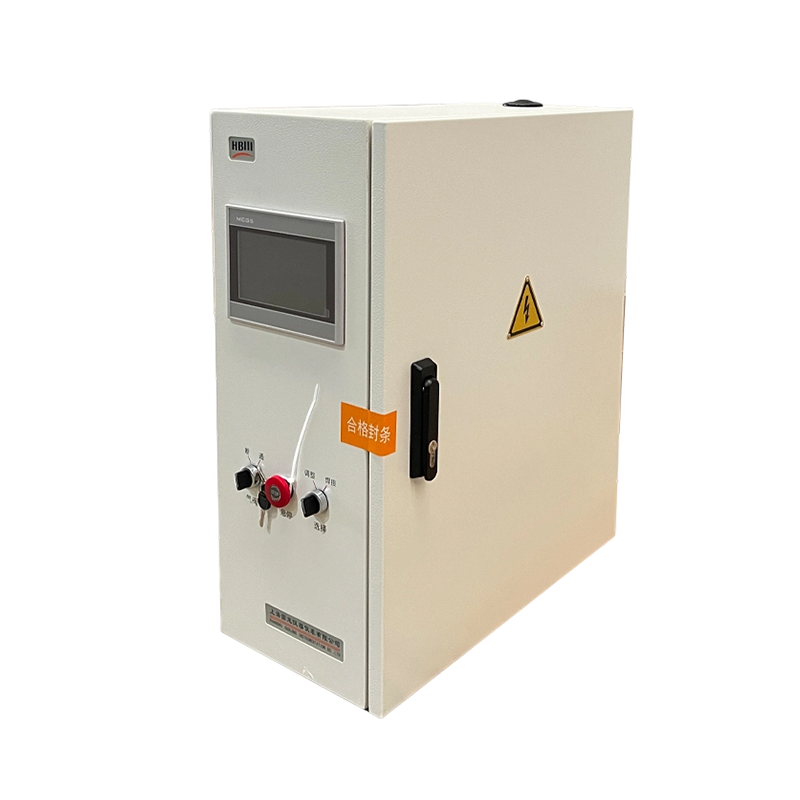
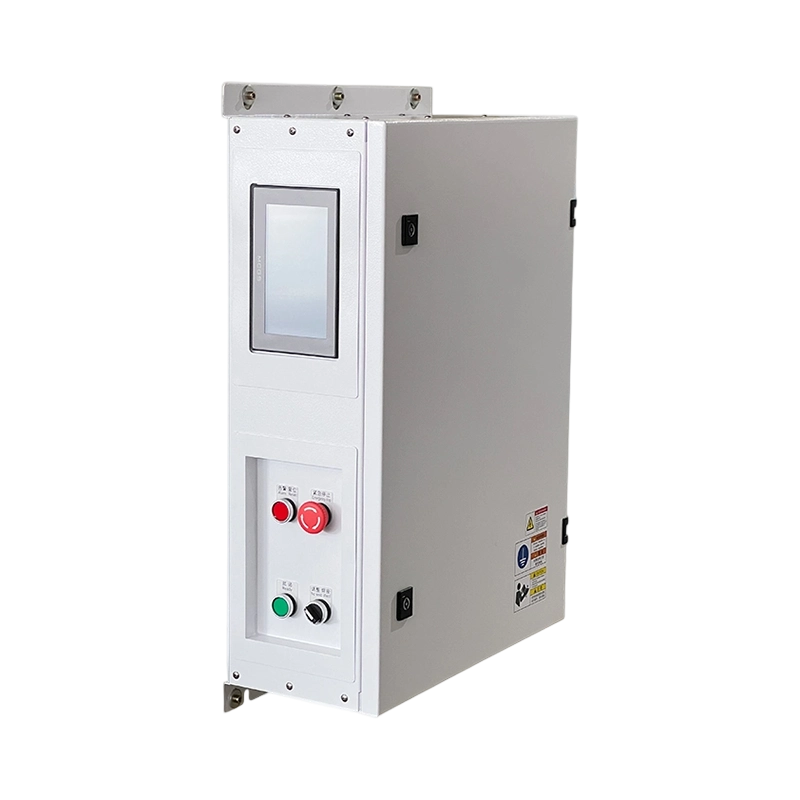
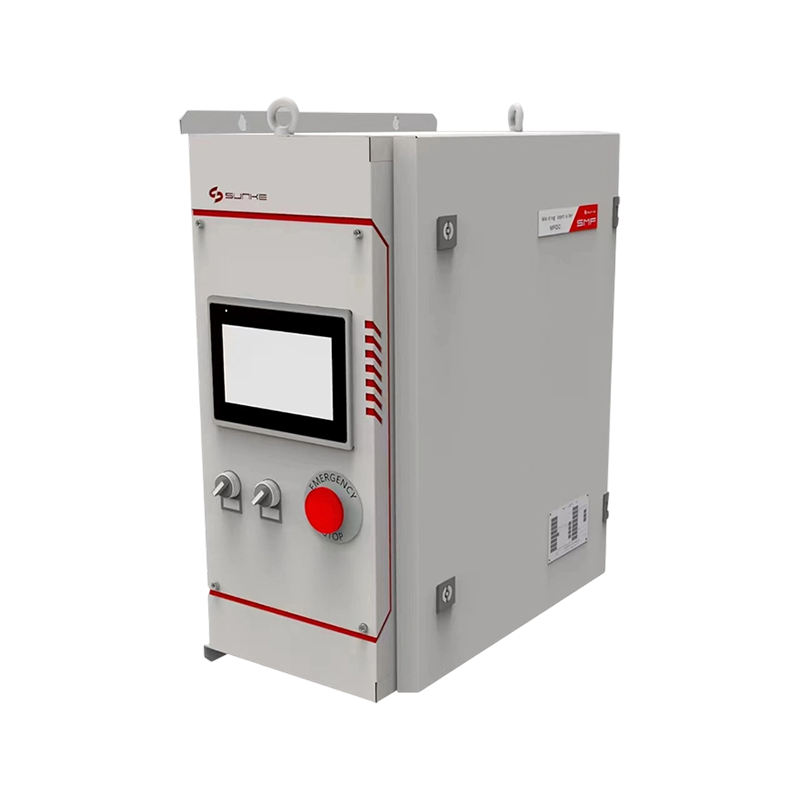
Mid‑Frequency Direct Current (MFDC) Welding Controllers use inverter technology to convert mains frequency into a higher frequency output (typically ~400 Hz to 4000 Hz) and provide DC welding current. Compared to traditional power frequency controllers, MFDC controllers deliver faster response, higher welding efficiency, and more stable output, significantly improving weld quality while reducing transformer size and energy consumption. MFDC controllers are widely used in automated welding, robotic welding, and high‑quality welding applications.
About Us
Yongkang Jiaxiao Welding Automation Equipment Co., Ltd.
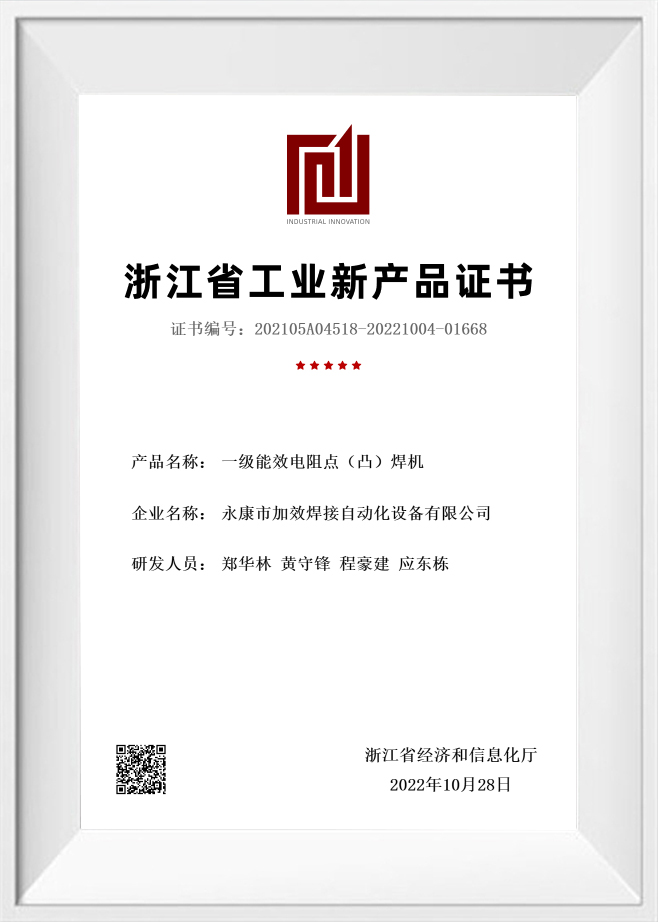
Since its establishment 30 years ago, Yongkang Jiaxiao Welding Automation Equipment Co., Ltd. has specialized in the research, development, manufacturing, sales, and service of resistance welding machines, specialized welding machines, MFDC Controllers for Spot Welding Machines, and automated stamping equipment for materials such as copper, aluminum, iron, and stainless steel. The Variable Frequency Controller supplier boasts a dedicated R&D team led by experts and comprised of diverse engineers. Its products have passed both the Chinese 3C and European CE certifications, and the company holds dozens of national patents. The company is a leading domestic manufacturer of resistance and automatic welding machines.
Certificate Of Honour


News
Message Feedback
MFDC Welding Controller for Medium Frequency DC Resistance Welding
An MFDC welding controller is the core control unit used in medium frequency direct current resistance welding equipment. It controls inverter output, welding current, welding time, pressure timing, feedback signals, safety logic, and automation communication. In medium frequency spot welders, projection welders, robotic welding stations, and automated resistance welding lines, the controller determines how welding energy is converted, regulated, monitored, and delivered to the weld point.
Compared with traditional power frequency AC welding control, MFDC control provides a more compact power structure, faster current response, and more flexible welding parameter adjustment. For welding machine manufacturers, automation integrators, production plants, and maintenance teams, selecting the correct MFDC welding controller is important for machine compatibility, process repeatability, interface integration, and long-term equipment operation.
What Is an MFDC Welding Controller?
An MFDC welding controller is the main control unit used in medium frequency inverter resistance welding machines. It converts and regulates industrial AC power into controlled DC welding current, while managing the welding sequence, feedback signals, protection functions, and automation interfaces.
Core Function in MFDC Resistance Welding
In an MFDC welding system, the controller coordinates:
- Input power conversion
- IGBT inverter control
- Medium frequency transformer output
- Secondary rectified DC current
- Welding current and voltage feedback
- Squeeze, weld, hold, and cooling time
- Fault protection and alarm output
- PLC, robot, and HMI communication
It connects the power circuit with the welding machine’s mechanical actions, helping the current output, electrode pressure, and machine movement follow the preset welding program.
How MFDC Welding Control Converts AC Power into DC Welding Current
MFDC welding technology uses inverter control to convert standard power frequency input into medium frequency output, typically in the range of about 400Hz to 4000Hz, depending on system design. This medium frequency power is then transformed and rectified into DC welding current.
Power Conversion Principle
The general conversion process includes:
- AC input power enters the welding power system.
- Input rectification converts AC power into DC bus voltage.
- IGBT inverter switching converts the DC bus into medium frequency AC output.
- Medium frequency transformer steps down voltage and increases current.
- Secondary rectification converts the transformer output into DC welding current.
- Current feedback measures actual welding current.
- Closed-loop control adjusts inverter output according to the preset welding parameters.
This process allows the MFDC controller to regulate welding current more quickly than many conventional AC systems.
Why Medium Frequency Output Matters
Medium frequency operation allows the transformer to be smaller and lighter than a traditional 50Hz or 60Hz transformer with similar output capacity. It also supports faster power regulation and is easier to integrate into compact welding machines, robotic guns, and automated welding cells.
MFDC Welding Controller vs Power Frequency AC Welding Controller
MFDC and power frequency AC welding controllers are both used in resistance welding, but they differ in power conversion method, output waveform, transformer structure, and control response.
| Item | MFDC Welding Controller | Power Frequency AC Welding Controller |
|---|---|---|
| Power principle | Inverter converts power to medium frequency, then rectified to DC | SCR controls 50Hz / 60Hz AC output |
| Output current | DC welding current | AC welding current |
| Transformer | Medium frequency transformer, usually smaller | Power frequency transformer, usually larger |
| Current response | Faster current adjustment | Based on AC cycle control |
| Control mode | Suitable for closed-loop constant current control | Commonly uses phase control or time-current control |
| Automation use | Strong fit for robotic and automated systems | Common in general-purpose resistance welding |
| Typical applications | Automotive parts, precision assemblies, automated lines | General spot, seam, and projection welding |
Practical Selection Difference
A power frequency controller is often used for conventional AC resistance welders with mature machine structures and moderate process requirements.
An MFDC controller is more suitable when the application requires compact transformer design, stable current regulation, higher welding consistency, automation communication, or current feedback control.
Applications of MFDC Welding Controllers
MFDC welding controllers show up wherever resistance welding calls for steady DC current output, heat input that repeats reliably from one cycle to the next, and straightforward integration into automated equipment.
Common Applications
- Medium frequency spot welding This finds use across sheet metal parts, brackets, panels, stamped parts, and metal assemblies that need weld formation to stay consistent time after time.
- Projection welding A solid fit for weld nuts, studs, bosses, terminals, fasteners, and raised points, particularly where current needs careful control while the projection collapses.
- Multi-point welding Put to work in systems that require coordinated weld timing, program selection, and sequence control across multiple weld points at once.
- Robotic resistance welding Paired with robotic welding guns or cells to handle start signals, program switching, weld completion feedback, and fault output.
- Automated welding lines Woven into setups involving PLCs, servo positioning, automatic feeding, pneumatic clamping, sensors, and safety circuits.
- Automotive and appliance parts Applied to brackets, reinforcement parts, seat components, stainless parts, panels, hinges, terminals, housings, and metal frames.
- Sheet metal welding Well suited to cold rolled sheet, galvanized sheet, stainless sheet, formed parts, cabinets, enclosures, and fabricated metal components.
How to Select an MFDC Welding Controller
Working out the right MFDC welding controller should begin with the welding machine type, power system, transformer specification, welding process, and automation requirement. The controller needs to line up with both the electrical output and the machine's own control logic.
Key Selection Factors
- Machine type Nail down whether the controller is going into an MFDC spot welder, projection welder, multi-point welder, robotic welding gun, automatic welding station, custom machine, or retrofit project.
- Welding process Different processes bring different demands entirely, from current curves and timing sequences to pressure control, pulse settings, and feedback methods.
- Power and output range Take a close look at input voltage, phase, frequency, rated power, DC bus design, output current range, duty requirement, and cooling method.
- Transformer matching Confirm the medium frequency range, transformer capacity, turns ratio, cooling type, secondary rectifier structure, cable length, loop impedance, and how the welding gun or fixture is designed.
- Control mode Pick out functions that fit the job, whether that's constant current control, current feedback, voltage feedback, multi-pulse output, current rise/fall control, weld monitoring, or alarm limits.
- Material and production rhythm Material thickness, coating, weld area, electrode size, and production cycle all feed into what response speed, cooling capacity, and parameter storage the controller actually needs.
- Automation interface For systems built around automation, verify digital I/O, PLC communication, robot signals, program selection, safety interlocks, data monitoring, traceability needs, and connection to MES or line systems.
Standard MFDC Controllers and Custom MFDC Welding Control Systems
Standard MFDC controllers and custom control systems serve different machine requirements. The selection depends on system complexity, interface needs, and process sequence.
| Item | Standard MFDC Controller | Custom MFDC Control System |
|---|---|---|
| Main use | Regular MFDC spot, projection, and multi-point welders | Automated lines, robotic cells, special welding machines |
| Control logic | Standard welding timing and current control | Designed around machine sequence and production logic |
| Interface | Common I/O and HMI operation | Customized PLC, robot, servo, sensor, and safety interfaces |
| Parameter management | Welding programs and standard recipes | Product recipes, traceability data, line-level data exchange |
| Installation | Standard cabinet or panel layout | Adapted to machine cabinet, fixture, and wiring structure |
| Application scenario | New welding machines or simple replacements | Complex integration, retrofit, and non-standard equipment |
When a Standard Controller Is Suitable
A standard MFDC controller is suitable when machine structure, transformer specifications, output current range, and interface requirements match regular control functions.
When a Custom System Is Needed
A custom MFDC welding control system is more suitable when the equipment requires robot coordination, servo positioning, automatic feeding, multi-station control, special safety logic, data collection, quality traceability, or replacement of an old electrical control platform.
FAQ About MFDC Welding Controllers
- What does MFDC mean in resistance welding? MFDC means medium frequency direct current. In resistance welding, it refers to a system that converts power frequency input into medium frequency output through inverter technology, then rectifies it into DC welding current.
- What frequency does an MFDC welding controller use? Many MFDC systems operate around 400Hz to 4000Hz, depending on controller design, inverter structure, transformer specifications, and application requirements.
- How is an MFDC controller different from an AC welding controller? An AC welding controller usually controls 50Hz or 60Hz output through SCR phase control. An MFDC controller uses inverter technology, a medium frequency transformer, secondary rectification, and feedback regulation to produce controlled DC welding current.
- Why is constant current control important? Constant current control helps reduce current variation caused by workpiece resistance changes, electrode wear, coating differences, and secondary loop changes. It supports more repeatable heat input when the complete welding system is properly matched.
- Can an MFDC controller be connected to a PLC? Yes. Many MFDC controllers support digital I/O or communication interfaces for PLC connection. Common signals include start, ready, program selection, weld complete, alarm, reset, and interlock status.
- Can an MFDC controller work with robots? Yes. MFDC controllers can be integrated with robotic welding systems through suitable interface signals or communication methods. Robot applications usually require program selection, start command, completion feedback, alarm output, and safety interlock logic.
- What materials can be welded with MFDC resistance welding equipment? Common materials include low carbon steel, stainless steel, galvanized sheet, cold rolled sheet, high-strength steel, metal brackets, stamped parts, appliance metal parts, and selected battery structural components. Actual weldability depends on material thickness, surface condition, joint design, electrode design, and process settings.
- What should be checked if welding current is unstable? Check current sensor wiring, secondary cable connections, electrode wear, transformer matching, grounding, feedback calibration, input power stability, and parameter settings. Mechanical pressure and workpiece fit-up should also be reviewed.
- Can an old AC welding controller be replaced with an MFDC controller? A direct replacement is usually not simple because MFDC systems require an inverter power unit, medium frequency transformer, secondary rectifier, feedback sensors, and compatible cooling and control interfaces. Retrofit feasibility should be evaluated based on the complete machine structure.
- What information is needed to select an MFDC welding controller? Important information includes machine type, input power, output current range, transformer specification, welding process, material thickness, control mode, feedback method, PLC or robot interface, safety circuit, cooling method, and installation dimensions.



 +86-15268688035
 jx12@4006796688.com
 NO.99,Huaxi Road,Chengxi New District,Yongkang city,Zhejiang China.
Message Us Right Now!
Copyright © Yongkang Jiaxiao Welding Automation Equipment Co., Ltd. All Rights
Reserved
China Welding Equipment Manufacturer
